
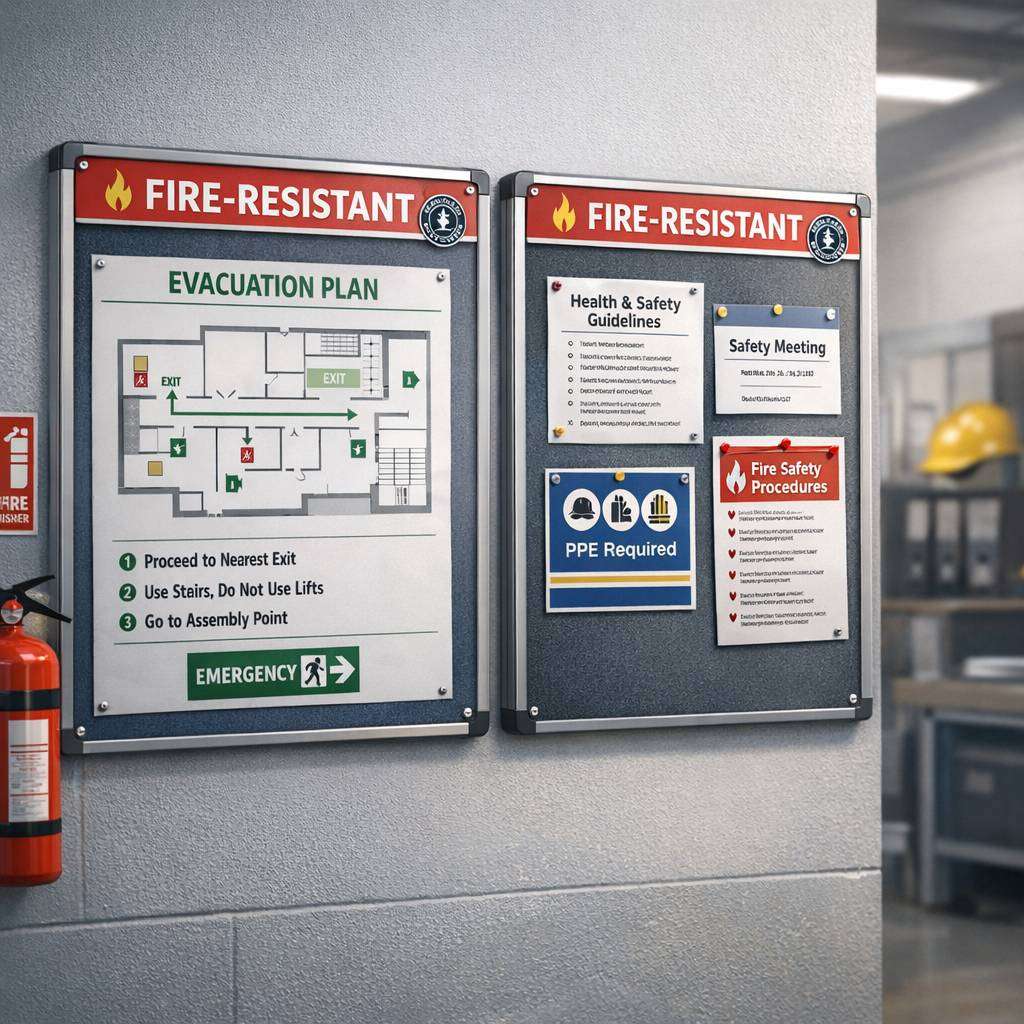
In any workplace, clear communication and safety-minded infrastructure go hand in hand. Fire resistant notice boards are a practical, low-cost solution that supports both. As an expert in workplace safety and communications infrastructure, I will explore how to choose, use, and maintain fire retardant noticeboards to help protect staff and assets.
Why fire resistant noticeboards matter
The primary role of notice boards is to disseminate essential information—policy updates, emergency procedures, training schedules, and health and safety notices. When these boards are built to resist ignition and withstand heat, they contribute to overall fire safety in several ways:
- They reduce the risk of flame spread from notices and mounting materials.
- They help preserve critical information during an incident, aiding in evacuation and post-incident procedures.
- They offer peace of mind to staff and visitors, reinforcing a culture of safety.
For organisations with high fire risk or strict compliance requirements, investing in fire rated notice boards, fire proof bulletin boards, or fire rated lockable notice boards can be a sensible precaution.
Key features to look for
Not all fire resistant notice boards are created equal. When evaluating options, focus on features that impact performance, durability, and security.
- Fire resistance rating: Look for boards tested to recognised standards. The rating should indicate how long the board resists ignition and maintains integrity under heat.
- Material composition: Fibreglass, mineral core, or treated timber cores with fire retardant finishes are common. Boards should be non-combustible or self-extinguishing and resistant to warping or distortion under heat.
- Construction quality: A robust frame, secure joints, and protected fastenings minimise gaps where flames or smoke could penetrate.
- Surface finish: A smooth, high-quality surface suitable for write-on materials and magnets improves usability while maintaining fire resistance.
- Size and configuration: Consider wall space and the amount of information to post. Fire retardant noticeboards come in various dimensions, including larger wall-mounted units and modular, freestanding styles.
- Security features: Fire rated lockable notice boards provide controlled access to sensitive information, helping comply with data protection and safeguarding policies.
- Durability and maintenance: Look for vandal-resistant coatings and materials, easy-to-clean surfaces, and replacement parts for longevity.
Types of fire resistant notice boards
Different situations call for different designs. Here are common types you may encounter:
- Fire retardant noticeboards: General-purpose boards with enhanced fire resistance suitable for most office, education, and healthcare environments.
- Fire proof bulletin boards: Static installations designed to resist ignition and maintain shape under heat; excellent for corridors, staff rooms, and reception areas.
- Fire proof notice boards: Similar to fire proof bulletin boards but often available with wall-mounted frames and quick-release access.
- Fire rated lockable notice boards: Panels with locking mechanisms to protect sensitive notices from unauthorised access, ideal for human resources, incident reports, and confidential safety procedures.
- Flame retardant notice boards: Boards treated with flame retardants to slow or stop ignition, frequently used in high-traffic areas or where compliance requires additional safeguards.
Note that product terminology varies by supplier. When shopping, read the specifications to verify exact fire ratings and certifications rather than relying on marketing terms alone.
How to choose the right board for your space
- Assess risk and compliance needs: Higher risk environments (e.g., chemical plants, laboratories) may require higher fire resistance ratings and lockable access.
- Consider location: Public-facing areas benefit from combined visibility and security. In corridors and classrooms, fire rated noticeboards should align with fire safety routes and signage guidelines.
- Evaluate contents: If you post sensitive information, prioritise fire rated lockable notice boards. For general notices, standard fire retardant noticeboards may suffice.
- Plan for accessibility: Ensure boards are mounted at appropriate heights for all staff, including those with limited mobility. Lockable boards should still allow quick access during emergencies by trained personnel.
- Ensure compatibility with existing systems: If you use magnetic or pin-based postings, verify that the board surface supports your preferred posting method without compromising fire resistance.
Installation and best practices
- Location planning: Position boards away from heat sources, such as radiators or machinery, to reduce the risk of thermal exposure. Avoid enclosed spaces with poor ventilation that could trap smoke.
- Mounting considerations: Secure boards to wall studs or use appropriate anchors for the surface type. Ensure the frame remains rigid to resist impact or attempt to bypass the lock.
- Signage and visibility: Use clear, large headings and high-contrast text. Regularly update content to prevent information from becoming outdated, which can undermine safety communications during an incident.
- Posting protocols: Establish a standard workflow for posting new notices, removing outdated ones, and locking away confidential documents. Maintain a minimum information standard that supports emergency procedures and contact details.
- Maintenance checks: Schedule periodic inspections for signs of wear, delamination, or damage to fire retardant finishes. Replace any boards showing significant degradation or compromised integrity.
FAQ: Fire Resistant Notice Boards
What is a fire resistant notice board?
A fire resistant notice board is a display board designed to resist ignition and withstand high temperatures for a specified period, helping protect important notices and information in case of a fire.
What materials are commonly used in fire resistant notice boards?
Common materials include fire-rated steel or aluminum frames, mineral fiber or dense polyurethane cores, intumescent coatings, and fire-retardant fabrics or laminates. Some boards combine a fire-rated core with a durable exterior surface.
How long do fire resistant notice boards protect information?
Protection duration varies by product and standard. Many boards are tested to resist ignition and maintain integrity for 30, 60, or 120 minutes under specified fire conditions. Always check the product’s fire rating and the applicable standards.
What standards do fire resistant notice boards meet?
Standards may include EN 13501, EN 14641, BS 476, or ASTM E84, depending on the region and product. Look for certification marks or test reports from accredited laboratories.
Where should I install a fire resistant notice board?
Install in locations with regulatory requirements or higher fire risk, such as corridors, exits, boiler rooms, server rooms, and near electrical panels. Ensure proper mounting, ventilation for the core, and compliance with local fire safety codes.
Can I customise the size and layout of a fire resistant notice board?
Yes. Many manufacturers offer custom dimensions, frame finishes, and layout options (single or multi-panel). Some boards also provide magnetic or writable surfaces for flexibility.
How do I maintain a fire resistant notice board?
Regularly inspect for damage to the exterior surface, frame integrity, and mounting hardware. Clean according to the manufacturer’s guidelines, and replace any damaged parts promptly to maintain fire performance.
Are fire resistant notice boards suitable for wet or humid environments?
Some boards are designed for damp or outdoor environments with water-resistant coatings or enclosures. If exposure to moisture is a concern, choose models rated for damp or outdoor use and ensure proper sealing.
What is the difference between fire resistant and fireproof notice boards?
Fire resistant boards resist ignition and limit fire spread for a period, while fireproof (or non-combustible) boards are designed to not ignite under fire conditions. Always verify the specific rating and test standards.
How do I choose the right fire resistant notice board for my space?
Consider the required fire rating, size, mounting type, surface (magnetic/writable), location (indoor/outdoor), and budget. Check local safety regulations and consult with the supplier for compliance advice.
Are there eco-friendly options for fire resistant notice boards?
Yes, many suppliers offer boards with recycled or low-VOC materials, and environmentally friendly finishes. Look for sustainability certifications or disclosures from the manufacturer.
Compliance and standards
Fire resistant notice boards may be subject to local building codes, fire safety regulations, and industry standards. In the UK, look for products tested to relevant British and European standards or those certified by recognised bodies. Documentation should accompany purchases, including fire ratings, test reports, and installation instructions. If your organisation handles confidential data, ensure that fire rated lockable notice boards meet data protection guidelines and provide auditable access control.
Placement strategies for maximum safety
- Emergency procedures: Place fire resistant notice boards near emergency exits, muster points, and safety stations. Ensure evacuation routes are clearly marked and that information on boards supports a swift, orderly response.
- Training and drills: During safety training, use the boards to display recent risk assessments, drill schedules, and feedback forms. Keeping these notices up-to-date improves organisational learning and readiness.
- Incident reporting: Use lockable boards to post incident summaries, corrective actions, and lessons learned. This supports transparency while protecting sensitive information.
Maintenance and long-term considerations
- Replacement cycles: Even sturdy fire proof boards have a finite lifespan. Plan for periodic replacements to ensure continued performance and surface usability.
- Environmental resilience: Consider boards with UV-stable finishes if they are exposed to sunlight, and ensure surfaces resist finger marks and general wear in busy environments.
- Reconfiguration: As teams evolve, modular or adaptable boards allow you to reconfigure postings without replacing the unit.
- Documentation: Maintain records of where each fire resistant notice board is installed, its rating, and maintenance history to support audits and safety reviews.
Fire resistant notice boards provide durable, flame-retardant solutions for offices, schools, and public spaces. These boards resist heat and scorching damage while keeping notices legible and secure. Ideal for high-traffic areas, they help maintain safety standards and reduce replacement costs. When searching for reliable options, consider trusted manufacturers with tested fire resistance ratings and easy-to-clean surfaces. For more information and quality products, visit https://www.displaydevelopments.co.uk.
Final thoughts
Choosing the right fire resistant notice boards involves understanding both safety performance and practical use. Whether you opt for fire retardant noticeboards, a fire proof bulletin board, or a fire rated lockable notice board, the goal remains the same: provide ready access to essential information while preserving resilience in the face of fire and heat. By selecting appropriate materials, prioritising security where necessary, and implementing sound installation and maintenance practices, organisations can strengthen their safety culture and protect people, information, and property.