
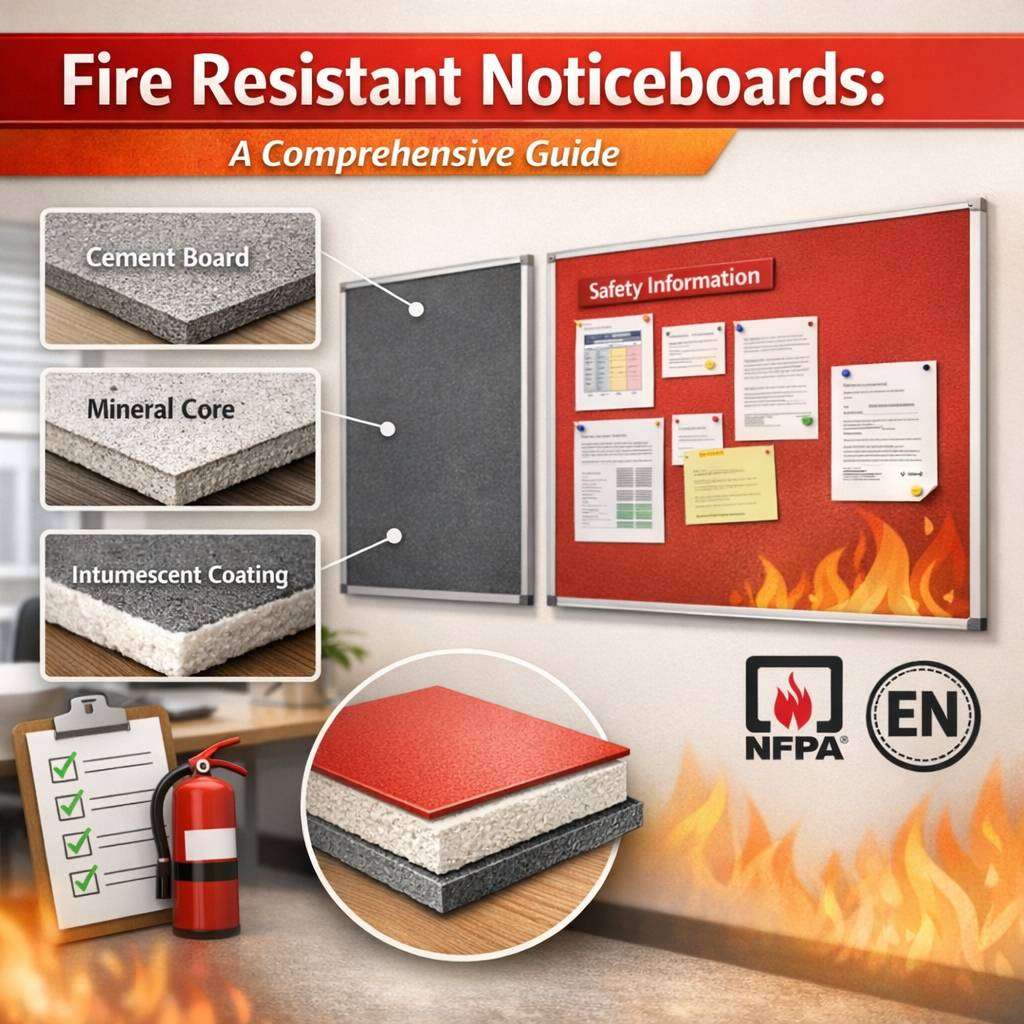
In environments where safety, information integrity, and regulatory adherence are paramount, choosing the right noticeboards is essential. Fire resistant noticeboards offer a robust combination of resilience and reliability, helping organisations protect both people and property while ensuring critical information remains legible in the event of a blaze or moderate heat exposure. As buildings become more complex and compliance requirements tighten, understanding the options, benefits, and limitations of fire proof bulletin boards and related products is vital for facilities managers, health and safety professionals, and procurement teams.
This guide provides a clear overview of fire rated display boards, flame retardant notice boards, and the practical considerations that influence selection, installation, and ongoing maintenance. By outlining key specifications, testing standards, and best practices, we aim to enable informed purchasing decisions that align with industry standards and local regulations.
What makes fire resistant noticeboards reliable for safety-critical environments?In many settings—schools, hospitals, office blocks, data centres, and public venues—the ability to convey information reliably during an emergency is a core requirement. Fire rated noticeboards are designed to resist ignition, limit flame spread, and preserve the legibility of notices when exposed to heat or fire conditions. Features often found in these products include:
- Classifications and certifications: Fire proof notice boards typically carry third-party test results and conformity marks that reflect compliance with recognised standards. Look for certifications such as EN, UL, or other relevant regional schemes that indicate fire resistance performance.
- Materials and construction: Fire resistant noticeboards use non-combustible or low-toxicity flame retardant substrates, with metal or high-grade polymer frames, sealed edges, and moisture barriers that reduce degradation in adverse conditions.
- Insulation and partitioning: Some models incorporate insulating cores and air gaps to slow heat transfer, protecting the information surface and the user from radiant heat exposure.
- Surface treatments: Special coatings or laminates provide additional resistance to heat, chemicals, and abrasion, prolonging readability and reducing the need for frequent replacement.
- Mounting and durability: Wind, impact, and vandal resistance are relevant in public or high-traffic areas. Approved fixing methods and tamper-evident features can enhance safety and longevity.
Standards and compliance considerationsSelecting a fire rated display board requires careful assessment of regulatory expectations and internal safety policies. Key aspects to verify include:
- Fire performance rating: Review the recognised testing standard and the achieved rating (for example, flame spread index, smoke development, and thermal insulation properties). The higher the rating, the greater the expected performance in a fire scenario.
- Application-specific requirements: Different environments may demand varying levels of fire resistance. For instance, corridors, escape routes, and control rooms may have stricter expectations than general messaging areas.
- Durability and maintenance: Fire proof bulletin boards should maintain integrity over time, even when faced with cleaning agents, frequent usage, or humidity. Confirm compatible cleaning guidelines to avoid compromising the fire-resistant properties.
- Accessibility and visibility: In emergencies, clear, legible notices are essential. Ensure the chosen fire retardant notice boards provide a large, easily readable display surface and comply with local accessibility standards.
Material options and their implicationsThere are several material families commonly used in fire resistant noticeboards:
- Fibreboard and plaster-impregnated boards: Provide good fire resistance and a smooth display surface, suitable for dry erase or pin-based notices.
- Aluminium composite panels: Offer rigidity, corrosion resistance, and a low weight profile. Their fire performance can vary by core material; always check the rated rating.
- Glass or ceramic surfaces: Provide excellent durability and legibility but may require careful handling and mounting considerations in certain environments.
- Steel-framed systems with fire-rated cores: Combine structural robustness with high fire resistance, suitable for high-traffic or secure environments.
Installation considerations for optimal safetyTo maximise effectiveness, installation should address both performance and usability:
- Positioning: Place noticeboards away from heat sources, direct sunlight, or fluorescent fixtures that could degrade notices or misrepresent information during a fire event.
- Seal integrity: Ensure tight seals around the display area to slow the ingress of heat and smoke, preserving the notices for longer periods.
- Fixings and vandal resistance: Use tamper-resistant fixings and ensure boards are securely mounted at appropriate heights to be accessible to all users, including wheelchair users where applicable.
- Cleaning and maintenance: Establish routine checks to verify readability, replace damaged surfaces promptly, and inspect seals and frames for signs of wear that could compromise performance.
Operational benefits of fire proof bulletin boardsBeyond emergency scenarios, fire proof notice boards contribute to ongoing safety and organisational effectiveness:
- Consistent information dissemination: The stable display surface reduces the risk of notices rubbing off or becoming illegible due to heat exposure.
- Reduced downtime: In the event of a fire or heat incident nearby, fire rated display boards are more likely to retain critical notices long enough for occupants to locate safety information or evacuation procedures.
- Compliance confidence: Using certified fire rated noticeboards demonstrates due diligence in risk management and supports audits and inspections.
Choosing the right product for your organisationWhen evaluating options such as fire rated noticeboards, flame retardant notice boards, and related products, engage in a thorough comparison process:
- Verify certifications and test data from reputable laboratories.
- Assess the environmental conditions where the boards will be installed (humidity, temperature fluctuations, potential chemical exposure).
- Consider the total cost of ownership, including installation, maintenance, and potential replacement cycles.
- Request sample materials or demonstrations to evaluate readability, surface longevity, and ease of updating notices.
Final thoughtsFire resistant noticeboards represent a prudent investment in safety, durability, and compliance. By prioritising certified fire proof display boards, selecting appropriate materials, and implementing thoughtful installation and maintenance practices, organisations can ensure critical information remains accessible and legible when it matters most. Whether your facility manages public access spaces, healthcare environments, or secure offices, embracing fire retardant noticeboards and their high-performance counterparts supports safer, more resilient operations.
Fire resistant noticeboards provide reliable protection for important information in high-risk environments. These boards are built with non-combustible materials, offering enhanced safety without sacrificing readability or durability. Ideal for schools, offices, and public buildings, they help ensure compliance with fire safety regulations while preserving critical announcements and emergency plans. For more options and expert guidance, visit https://www.displaydevelopments.co.uk to explore a wide range of fire resistant noticeboards.
FAQ: Fire Resistant Noticeboards
What is a fire resistant noticeboard?
A fire resistant noticeboard is a display board designed to resist ignition and limit the spread of flames and smoke. It helps protect posted information from heat and fire exposure for a specified period, making it suitable for environments with higher fire risk.
How long do fire resistant noticeboards remain fire resistant?
The fire resistance rating varies by product and standard. Common ratings include 30, 60, or 90 minutes of fire resistance under specified test conditions. Always check the manufacturer’s specification and certified test standards (e.g., EN, BS, or NFPA) for exact performance.
Where can fire resistant noticeboards be used?
They are suitable for schools, offices, hospitals, laboratories, industrial facilities, and any area requiring added protection for important notices, emergency procedures, or safety information.
What standards do fire resistant noticeboards comply with?
Standards vary by region. Typical certifications might include EN 13501, EN 13501-4 for fire resistance of boards, or local fire safety standards. Verify with the supplier for the exact standard and the test method used.
What materials are used in fire resistant noticeboards?
Common materials include mineral fibre composite boards, gypsum-based cores, or specially treated timber composites with fire retardant coatings. The visible surface may be cork, fabric, corkboard, or laminated melamine for durability.
Do fire resistant noticeboards require special maintenance?
Maintenance is generally similar to regular noticeboards: keep surfaces clean, replace damaged posting pins, and inspect seals or edges for wear. Some models may have replaceable fire-rated cores; follow the manufacturer’s care instructions.
How should I choose the right size and mounting for a fire resistant noticeboard?
Consider the space where it will be installed, the volume of notices to display, and whether the board needs to be recessed or surface-mounted. Ensure mounting hardware is rated for the wall type and check load capacity for pinned notices.
Are fire resistant noticeboards more expensive than standard boards?
Typically, yes—the fire-resistant core and certification add to the cost. However, the increased safety and compliance benefits can justify the investment, especially in high-fire-risk environments.
Can fire resistant noticeboards be used outdoors?
Most fire resistant boards are designed for indoor use. If outdoor use is required, look for products specifically rated for weather resistance in addition to fire resistance.
How do I verify a product’s fire resistance claims?
Ask for test certificates, standard numbers, and third-party verification. Look for labels or documentation from accredited laboratories and ensure the rating matches your local fire safety requirements.
Are there environmentally friendly options for fire resistant noticeboards?
Yes. Many manufacturers offer boards with recycled content, low-VOC adhesives, and reduced formaldehyde emissions. Look for eco-labels or sustainability statements from the supplier.
How do I install a fire resistant noticeboard?
Typically, you mark mounting points, use appropriate wall anchors, and secure the board with screws. Some models come with hidden fixings or frames to maintain a clean look. Always follow the provided installation guide.
What should I post on a fire resistant noticeboard?
Post essential notices, evacuation routes, safety procedures, daily announcements, and other critical information. Keep content up-to-date and ensure it is legible from a distance.
Can I replace the board face or core if damaged?
Many boards allow replacement of the surface or core components. Check with the manufacturer for compatibility and warranty terms before attempting repairs.